Herb-Infused Vegetable Broth
Highlighted under: Healthy Recipe Ideas
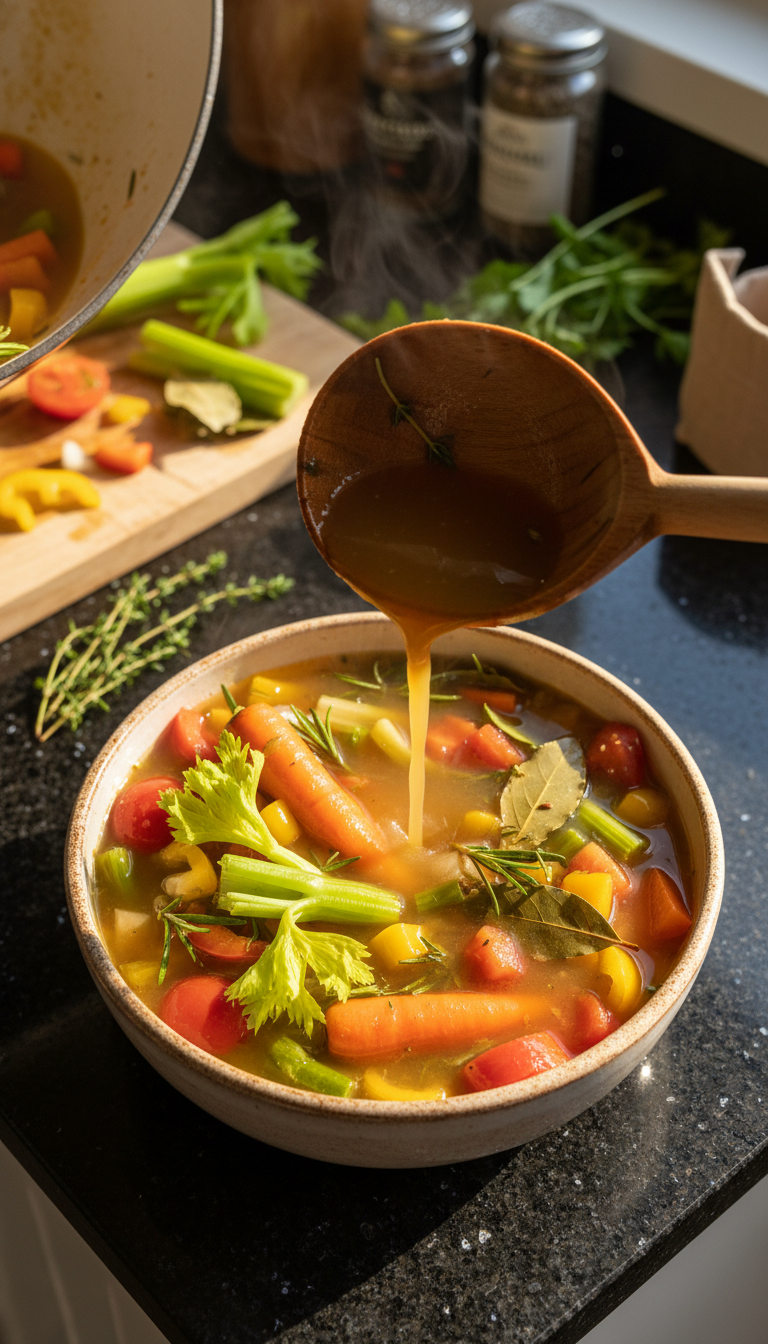
I love making my own vegetable broth because it’s both a comforting and versatile base for a multitude of dishes. With fresh herbs and seasonal vegetables, this homemade broth is packed with flavor and nutrients. It's a perfect way to use up leftover vegetables, and I find that the longer it simmers, the richer and more aromatic it becomes. I enjoy this broth as a warm beverage on chilly days or as a base for soups and risottos. Give it a try, and you’ll appreciate the difference homemade makes!
During one chilly afternoon, I decided to experiment with what I had in my kitchen and ended up creating this delightful herb-infused vegetable broth. I used fresh thyme, rosemary, and some leftover veggies that packed a powerhouse of flavor. As it simmered, my kitchen was filled with an enjoyable aroma that made me realize the magic of homemade broth.
I’ve noticed that letting the broth sit for a few hours, or even overnight, allows the flavors to meld beautifully. Straining it through a fine mesh after simmering means that the broth is clear and ready for any recipe, whether it be a soup or a risotto. You’ll find it elevates any dish you use it in!
Why You Will Love This Recipe
- Packed with vibrant flavors from fresh herbs
- Easy to customize with whatever vegetables you have on hand
- Great for meal prep; freeze it for later use
- Perfect base for soups, risottos, and sauces
The Importance of Fresh Ingredients
Using fresh vegetables and herbs is crucial for achieving the best flavor in your broth. Fresh produce not only enhances the taste but also adds essential nutrients, which can elevate the health benefits of your broth. I recommend selecting seasonal vegetables for maximum flavor and freshness, as they often have more vibrant colors and aromas. Pay attention to firm, crisp vegetables to ensure a deeply flavored broth that can stand on its own or act as a base for more complex dishes.
Consider using organic vegetables whenever possible, as they tend to have richer flavors and are free from pesticides. If you're in a pinch, frozen vegetables can also work, though they may soften more quickly during cooking. Just be sure to adjust the cooking time accordingly! One of my favorite combinations includes using leeks and parsnips for a wonderfully sweet and earthy broth.
Enhancing Flavor through Simmering
The simmering process is critical in extracting all the flavors from your ingredients. By simmering the broth uncovered, you allow steam to escape, concentrating the broth and intensifying its flavor profile. If you find that your broth isn’t as robust as expected, try extending the cooking time to 90 minutes or more. Keep an eye on the liquid level and add more water if necessary to avoid burning the bottom of the pot.
A common mistake is rushing the simmering process. You want to keep the heat low enough that small bubbles barely rise to the surface. This gentle cooking helps to soften the vegetables while releasing their flavors gradually. I find that stirring occasionally also aids in distributing the flavors throughout the broth.
Storage and Versatility
This broth is a fantastic candidate for meal prep! Once cooled, you can store it in airtight containers in the refrigerator for up to a week. For longer storage, freeze the broth in portion-sized containers or ice cube trays. Thawing small portions allows you to easily add bone broth to sauces or use it as a base for soups on busy nights. Just remember to label your containers with the date to keep track of freshness.
When you’re ready to use the broth, consider enhancing it with additional herbs or spices to suit your dish. A splash of soy sauce or a dash of vinegar can add depth to the broth, while fresh basil or parsley can brighten the flavor. For a heartier meal, toss in some grains, beans, or noodles directly into the broth to create a wholesome soup.
Ingredients
Ingredients
Vegetable Broth Ingredients
- 2 tablespoons olive oil
- 1 onion, chopped
- 2 carrots, chopped
- 2 celery stalks, chopped
- 4 cloves garlic, crushed
- 1 bay leaf
- 1 teaspoon dried thyme
- 1 teaspoon dried rosemary
- 8 cups water
- Salt and pepper to taste
Instructions
Steps
Sauté Vegetables
In a large pot, heat the olive oil over medium heat. Add the chopped onion, carrots, and celery. Sauté for about 5 minutes, or until the vegetables are softened and the onion is translucent.
Add Garlic and Herbs
Stir in the crushed garlic, bay leaf, thyme, and rosemary. Cook for another 2 minutes until fragrant.
Simmer the Broth
Pour in the water and bring the mixture to a boil. Reduce the heat to low and let it simmer uncovered for at least 60 minutes. The longer you simmer, the more flavor you'll extract.
Strain and Season
After simmering, strain the broth through a fine mesh sieve into a large bowl, discarding the solids. Season the broth with salt and pepper to taste.
Pro Tips
- For added depth of flavor, roast your vegetables in the oven before adding them to the pot. This can give the broth a lovely rich taste.
Troubleshooting Common Issues
If your broth is too salty, consider adding a few slices of raw potato during simmering. The potato can absorb some of the excess salt, balancing the flavor. Alternatively, adding more water can dilute the saltiness, but be cautious not to compromise flavor quality. Taste frequently while simmering to achieve the right balance you desire.
Another common issue is dull flavor; if your broth tastes flat, it may lack acidity. A squeeze of lemon juice or a splash of apple cider vinegar can brighten and lift the flavor, making it more vibrant. Don’t hesitate to adjust the herbs and seasonings toward the end of cooking to customize it to your liking or spice it up with a hint of red pepper flakes.
Making Variations
Feel free to get creative with this recipe! Adding different herbs can drastically change the taste. For a more Mediterranean twist, consider including fresh basil or oregano. If you want to add an Asian flair, swapping in ginger and scallions can lead to an entirely different broth experience. Just be mindful of balancing the stronger flavors with your base ingredients.
For an even heartier version, throw in a handful of mushrooms or a few tomatoes. These ingredients add umami and richness, making your broth more satisfying. Do remember that the key is to keep the ratios balanced, so don’t overdo it on any single ingredient. Experiment and find your perfect blend!
Questions About Recipes
→ Can I freeze the broth?
Yes, you can freeze the broth in airtight containers for up to 3 months.
→ What vegetables can I use?
Feel free to use any leftover vegetables you have; just ensure robust flavors like garlic, leeks, or mushrooms.
→ How long does homemade vegetable broth last in the fridge?
It can last for about 4-5 days in the refrigerator.
→ Can I use dried herbs instead of fresh?
Yes, dried herbs work as well, but remember to use less since they're more concentrated in flavor.
Herb-Infused Vegetable Broth
Created by: The Quickbitehub Team
Recipe Type: Healthy Recipe Ideas
Skill Level: Easy
Final Quantity: 6 cups
What You'll Need
Vegetable Broth Ingredients
- 2 tablespoons olive oil
- 1 onion, chopped
- 2 carrots, chopped
- 2 celery stalks, chopped
- 4 cloves garlic, crushed
- 1 bay leaf
- 1 teaspoon dried thyme
- 1 teaspoon dried rosemary
- 8 cups water
- Salt and pepper to taste
How-To Steps
In a large pot, heat the olive oil over medium heat. Add the chopped onion, carrots, and celery. Sauté for about 5 minutes, or until the vegetables are softened and the onion is translucent.
Stir in the crushed garlic, bay leaf, thyme, and rosemary. Cook for another 2 minutes until fragrant.
Pour in the water and bring the mixture to a boil. Reduce the heat to low and let it simmer uncovered for at least 60 minutes. The longer you simmer, the more flavor you'll extract.
After simmering, strain the broth through a fine mesh sieve into a large bowl, discarding the solids. Season the broth with salt and pepper to taste.
Extra Tips
- For added depth of flavor, roast your vegetables in the oven before adding them to the pot. This can give the broth a lovely rich taste.
Nutritional Breakdown (Per Serving)
- Calories: 50 kcal
- Total Fat: 2g
- Saturated Fat: 0g
- Cholesterol: 0mg
- Sodium: 45mg
- Total Carbohydrates: 9g
- Dietary Fiber: 1g
- Sugars: 4g
- Protein: 1g